Industrial Chemical Storage Tanks: Types, Safety, Uses and Regulations in India
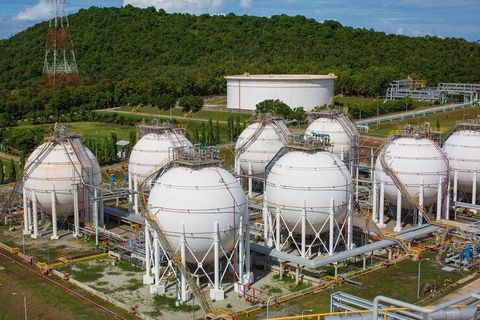
Industrial chemical storage tanks are specialized containers designed to store liquid chemicals, industrial fluids and certain hazardous substances under controlled conditions. They are important components of chemical manufacturing, pharmaceutical production, petrochemical processing, water treatment and other industrial operations.
Industries require dedicated storage systems because different chemicals have different physical and chemical properties. Some substances are corrosive, some are flammable, while others may react with moisture, air or incompatible materials.
Chemical storage tanks are designed according to factors such as chemical composition, temperature, pressure, storage capacity and environmental conditions. Their construction materials may include stainless steel, carbon steel, high-density polyethylene (HDPE), fiberglass-reinforced plastic (FRP) and specialized corrosion-resistant materials.
These tanks can be installed above ground or underground, depending on the application and relevant safety requirements.
Common chemicals stored in industrial tanks include acids, alkalis, solvents, liquid fertilizers, industrial cleaning chemicals, water treatment chemicals and petroleum-related substances.
A properly designed chemical storage system includes more than the tank itself. It may also contain pipelines, valves, pumps, level indicators, temperature sensors, ventilation arrangements, secondary containment and emergency protection equipment.
Importance of Industrial Chemical Storage Tanks
Chemical storage tanks play an important role in maintaining safe and organized industrial operations. They help facilities manage chemical inventories, maintain production continuity and reduce the possibility of uncontrolled chemical releases.
Their importance extends across several industrial sectors.
1. Chemical Manufacturing
Chemical manufacturing facilities use storage tanks to hold raw materials, intermediate products and finished chemical liquids. Separate storage arrangements help maintain material identification and prevent incompatible substances from mixing.
2. Pharmaceutical Industry
Pharmaceutical manufacturing requires controlled storage of selected solvents, liquid ingredients and process chemicals. Appropriate tank materials and hygienic design considerations help maintain product integrity.
3. Water Treatment Facilities
Water treatment plants use chemical storage tanks for substances such as sodium hypochlorite, alum and selected pH-adjustment chemicals.
These systems require suitable chemical compatibility, controlled dosing and leakage prevention.
4. Petrochemical and Refinery Industries
Refineries and petrochemical facilities store different liquid materials, including solvents, hydrocarbons and process chemicals. Their storage arrangements must consider fire protection, vapor control and applicable regulatory requirements.
5. Agriculture and Fertilizer Manufacturing
Agricultural chemical facilities use specialized tanks for liquid fertilizers and certain agricultural formulations. Material compatibility and protection against environmental contamination are important considerations.
6. Environmental Protection
Appropriate chemical storage systems help reduce the likelihood of soil and groundwater contamination. Secondary containment and leak detection arrangements provide additional protection.
The main problems addressed by industrial chemical storage tanks include:
- Uncontrolled chemical leakage.
- Chemical contamination and unwanted reactions.
- Exposure to hazardous vapors.
- Corrosion and structural deterioration.
- Unsafe chemical handling and transfer.
- Environmental contamination.
- Interruptions in industrial production.
Recent Updates and Trends in Industrial Chemical Storage Tanks
Industrial chemical storage technology is evolving through improvements in material engineering, digital monitoring, environmental protection and industrial safety.
Developments during 2025 and 2026 highlight several relevant trends.
1. Development of Advanced Tank Materials
Industrial facilities are increasingly evaluating materials based on chemical compatibility, corrosion resistance and operating conditions.
Examples include:
- HDPE tanks for compatible chemical applications.
- FRP tanks for selected corrosive liquids.
- Stainless steel tanks for suitable industrial processes.
- Specialized lined steel tanks for particular chemical environments.
Material selection depends on chemical concentration, temperature, pressure and other operating conditions. No single material is suitable for every chemical.
2. Digital Tank Monitoring Systems
Digital monitoring is becoming an important part of industrial storage management.
Modern monitoring arrangements can include:
- Ultrasonic level sensors.
- Radar-based level measurement.
- Temperature monitoring devices.
- Pressure transmitters.
- Leak detection sensors.
- Automated alarm systems.
These technologies help operators identify abnormal conditions and monitor storage operations more consistently.
3. Greater Attention to Secondary Containment
Secondary containment is an important safety consideration for chemical storage facilities.
Bund walls, containment basins and appropriately designed double-wall systems can help prevent leaked chemicals from spreading beyond designated storage areas.
Facilities are increasingly considering containment capacity, chemical compatibility and drainage arrangements during storage system planning.
4. Industrial Automation and Remote Monitoring
Automated valves, programmable controllers and centralized monitoring systems are being integrated into industrial chemical storage installations.
These technologies can support controlled filling, transfer operations and inventory monitoring.
However, automated systems still require appropriate inspection, maintenance and emergency operating procedures.
5. Environmental and Sustainability Considerations
Industrial organizations are giving greater attention to spill prevention, chemical waste management and groundwater protection.
Improved tank inspection practices, corrosion monitoring and responsible decommissioning procedures are important parts of this development.
6. Regulatory Developments During 2025 and 2026
India also introduced changes affecting pressure vessel regulation.
The Petroleum and Explosives Safety Organisation (PESO) published the Static and Mobile Pressure Vessels (Unfired) Amendment Rules, 2025, including a notification dated 25 June 2025.
A further amendment was published on 5 June 2026. It introduced a provision allowing ISO tank containers to be used for above-ground storage of compressed gas, subject to appropriate anchoring and structural integrity certification.
This development relates specifically to compressed-gas storage vessels. It should not be interpreted as a general approval for ordinary atmospheric chemical storage tanks.
Laws and Policies Affecting Industrial Chemical Storage Tanks in India
Industrial chemical storage tanks are affected by several Indian laws, technical standards and environmental regulations. Their applicability depends on the chemical being stored, storage quantity, pressure, location and industrial activity.
1. Manufacture, Storage and Import of Hazardous Chemical Rules, 1989
The MSIHC Rules, 1989 establish important requirements for the manufacture, storage and handling of specified hazardous chemicals.
The rules include provisions concerning:
- Identification of hazardous chemicals.
- Threshold quantities for regulatory applicability.
- Safety reports and safety audits, where applicable.
- On-site emergency planning.
- Accident prevention and reporting.
- Information and safety precautions for affected persons.
Facilities handling specified hazardous chemicals should evaluate the applicable schedules and quantity thresholds.
2. Chemical Accidents (Emergency Planning, Preparedness and Response) Rules, 1996
These rules establish arrangements for emergency planning and response to chemical accidents.
They provide a framework for coordinating responsibilities among relevant authorities and industrial establishments.
Emergency preparedness is particularly important for facilities storing toxic, reactive or flammable chemicals.
3. Environment (Protection) Act, 1986
The Environment (Protection) Act provides the broader framework for environmental protection in India.
Industrial chemical storage installations must consider applicable requirements concerning pollution prevention, hazardous substances and environmental protection.
4. Petroleum Rules, 2002
The Petroleum Rules, 2002 apply to petroleum storage and related installations as defined under the relevant legislation.
Certain petroleum storage tanks require regulatory approval or licensing through PESO, depending on product classification and storage quantity.
These requirements should not be automatically applied to every industrial chemical tank.
5. Static and Mobile Pressure Vessels (Unfired) Rules, 2016
These rules regulate specified static and mobile pressure vessels used for compressed gases.
Relevant requirements may include design approval, testing, inspection, safety certification and licensing.
They are particularly important for pressure-based storage systems rather than ordinary atmospheric tanks.
6. Bureau of Indian Standards (BIS)
BIS develops technical standards relevant to industrial tank construction, materials, testing and safety.
Depending on the tank design and application, engineers may refer to applicable Indian Standards and recognized technical codes.
Standards relating to steel storage tanks, material testing, corrosion protection and structural design may be relevant.
Regulatory compliance should be assessed by qualified professionals using the latest applicable notifications and technical requirements.
Tools and Resources for Industrial Chemical Storage Tanks
Technical resources help engineers, safety officers and industrial facility managers evaluate tank requirements and maintain safe storage operations.
Useful tools and resources include:
- Chemical Compatibility Charts: Help assess whether a tank material is suitable for a particular chemical.
- Storage Tank Capacity Calculator: Estimates tank volume based on diameter, height and tank geometry.
- Tank Thickness Calculator: Supports preliminary engineering assessments of tank wall dimensions.
- Corrosion Rate Calculator: Helps estimate material deterioration using inspection measurements over time.
- Secondary Containment Calculator: Assists with preliminary assessment of bund and containment capacity.
- Chemical Safety Data Sheets (SDS): Provide information about chemical hazards, handling, storage and emergency precautions.
- BIS Standards Database: Provides access to relevant Indian technical standards.
- PESO Regulatory Resources: Provide information about petroleum storage and pressure vessel regulations.
- CPCB Publications: Provide environmental guidance and information about industrial pollution prevention.
- Tank Inspection Templates: Help record inspection dates, corrosion observations, leakage conditions and maintenance activities.
- Industrial Asset Management Software: Helps maintain tank identification records, inspection histories and maintenance schedules.
Calculations from online tools should not replace detailed engineering assessments. Tank design, material selection and safety arrangements require verification against applicable standards and actual operating conditions.
Frequently Asked Questions About Industrial Chemical Storage Tanks
1. What are industrial chemical storage tanks used for?
Industrial chemical storage tanks are used to store liquid chemicals, industrial fluids and certain hazardous substances. They are commonly found in chemical plants, pharmaceutical facilities, refineries, water treatment plants and fertilizer manufacturing units.
2. Which materials are commonly used for chemical storage tanks?
Common materials include carbon steel, stainless steel, HDPE and fiberglass-reinforced plastic. The appropriate material depends on chemical compatibility, temperature, pressure, concentration and environmental conditions.
3. What is secondary containment in chemical storage?
Secondary containment is an additional protective structure designed to capture leaked or spilled chemicals if the primary tank fails. Examples include bund walls, containment basins and compatible double-wall tank systems.
4. How often should industrial chemical storage tanks be inspected?
Inspection frequency depends on tank design, stored chemical, corrosion conditions, operating environment and applicable regulations. Inspection programs may include routine visual checks, thickness measurements, structural assessments and leak detection. Relevant engineering standards and manufacturer recommendations should determine the inspection schedule.
5. Which Indian regulations apply to industrial chemical storage tanks?
Depending on the installation, relevant requirements may include the MSIHC Rules, 1989, Chemical Accidents Rules, 1996, Environment (Protection) Act, 1986, Petroleum Rules, 2002 and Static and Mobile Pressure Vessels Rules, 2016. Applicable BIS standards may also influence tank design and inspection.
Conclusion
Industrial chemical storage tanks are important components of modern industrial infrastructure. They support the safe storage and organized management of chemicals used in manufacturing, pharmaceuticals, petrochemicals, water treatment and other industrial sectors.
Developments in corrosion-resistant materials, automated monitoring, leak detection and secondary containment are influencing modern tank design and operation.
In India, chemical storage facilities must also consider environmental protection, hazardous chemical management, pressure vessel requirements and applicable technical standards.
Understanding chemical compatibility, tank construction, inspection practices and regulatory responsibilities helps industrial organizations maintain safer storage environments and reduce operational and environmental risks.
Proper chemical storage is therefore an important part of industrial safety, environmental management and reliable manufacturing operations.

Related Post...
Industrial Chemical Storage Tanks: Types, Safety, Uses and Regulations in India
Updated: November 26, 2026
Read More
Industrial Electrical Components: Types, Uses & Regulations in India
Updated: November 26, 2026
Read More