Industrial Plastic Molding: Processes, Applications & Technology
Industrial plastic molding is a manufacturing process used to create plastic components by shaping raw plastic materials inside specially designed molds or through other controlled forming methods. It is widely used to produce products with specific dimensions, shapes, strength, and functional characteristics.
The process exists because modern industries require plastic components that are lightweight, durable, adaptable, and suitable for large-scale production. Plastic molding makes it possible to manufacture everything from small electronic components to large automotive panels and industrial containers.
Plastic materials can be shaped into different forms depending on their chemical properties, temperature requirements, and intended applications.
Common materials used in industrial plastic molding include:
Polypropylene (PP): Used in containers, automotive components, and household products.
Polyethylene (PE): Commonly used in packaging, pipes, and storage containers.
Acrylonitrile Butadiene Styrene (ABS): Used in electronic housings and automotive interiors.
Polycarbonate (PC): Known for impact resistance and optical clarity.
Polyvinyl Chloride (PVC): Used in pipes, fittings, and electrical insulation.
Polyethylene Terephthalate (PET): Commonly used in packaging and beverage containers.
The choice of material depends on temperature resistance, flexibility, strength, chemical exposure, and environmental requirements.
How Industrial Plastic Molding Works
Although different molding methods have different operating principles, most processes involve preparing plastic material, shaping it, cooling or curing it, and removing the finished component.
A typical molding process involves:
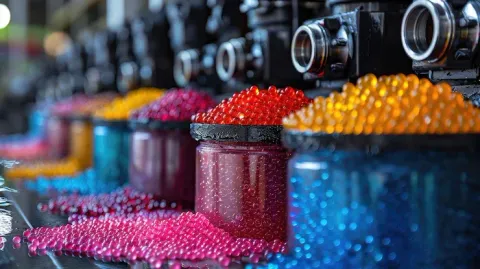
Material preparation: Plastic pellets, granules, or other feedstock are prepared according to the manufacturing requirements.
Heating: Thermoplastic materials are heated until they become soft or molten.
Molding: The material is introduced into a mold or shaped using specialised forming equipment.
Cooling or curing: The material becomes solid and retains the required shape.
Component removal: The finished part is removed from the mold.
Quality inspection: Dimensions, surface finish, and physical properties are checked.
Thermosetting plastics follow a different process because they undergo chemical curing and cannot simply be melted and reshaped after hardening.
Importance of Industrial Plastic Molding Today
Industrial plastic molding is important because plastic components are used throughout modern manufacturing and infrastructure.
The technology helps manufacturers produce complex shapes, maintain consistent product dimensions, and reduce the weight of many industrial components.
Industries That Depend on Plastic Molding
Automotive: Dashboard components, interior panels, bumpers, connectors, and protective covers.
Electronics: Switch housings, electrical enclosures, connectors, and appliance components.
Healthcare: Medical equipment housings, laboratory containers, and selected disposable medical products.
Construction: Pipe fittings, insulation components, drainage products, and protective materials.
Food processing: Storage containers, packaging components, and processing equipment parts.
Agriculture: Irrigation fittings, water storage components, and equipment housings.
Consumer manufacturing: Household appliances, furniture components, and everyday plastic products.
Problems Solved by Plastic Molding
Industrial plastic molding addresses several manufacturing challenges:
Complex shapes: It allows the production of components with detailed geometries.
Production consistency: Properly controlled molding processes help maintain repeatable dimensions.
Material flexibility: Different polymers provide different mechanical and chemical properties.
Lightweight construction: Plastic components can reduce overall product weight.
Component integration: Multiple design features can sometimes be incorporated into one molded component.
Material efficiency: Optimised mold design and production settings can reduce unnecessary material waste.
These characteristics make plastic molding an important part of modern industrial production.
Main Types of Industrial Plastic Molding Processes
Different molding technologies are used depending on component design, material characteristics, production volume, and required accuracy.
1. Plastic Injection Molding
Injection molding is one of the most widely used plastic manufacturing processes. Heated plastic is injected into a closed mold under controlled pressure.
After cooling, the molded component is removed.
Common applications include:
Automotive interior components.
Electrical enclosures.
Medical equipment components.
Household appliance parts.
Plastic packaging.
2. Plastic Blow Molding
Blow molding is used to manufacture hollow plastic products. Heated plastic is shaped using air pressure inside a mold.
Common applications include:
Plastic bottles.
Chemical containers.
Water storage tanks.
Industrial packaging.
3. Plastic Extrusion Molding
Extrusion involves pushing softened plastic through a specially shaped opening called a die. The material forms a continuous profile that is cooled and cut to the required length.
Common applications include:
Plastic pipes.
Cable insulation.
Window profiles.
Plastic sheets.
Tubing and channels.
4. Rotational Molding
Rotational molding uses heat and controlled mold rotation to distribute plastic material across the inside surface of a mold.
It is particularly suitable for hollow products with relatively large dimensions.
Typical applications include water tanks, storage containers, agricultural equipment, and industrial vessels.
5. Compression Molding
Compression molding involves placing measured plastic material inside a heated mold and applying pressure to shape it.
It is commonly used for thermosetting plastics, rubber components, electrical insulation parts, and selected automotive components.
Comparison of Major Plastic Molding Processes
Process
Main application
Key characteristic
Injection molding
Complex components
High dimensional repeatability
Blow molding
Hollow products
Air-pressure forming
Extrusion
Pipes and profiles
Continuous production
Rotational molding
Large hollow products
Mold rotation
Compression molding
Industrial components
Heat and pressure
Recent Updates and Developments in Industrial Plastic Molding
Industrial plastic molding is experiencing technological changes related to automation, material recycling, production monitoring, and manufacturing sustainability.
Several developments during 2025 and 2026 highlight these changes.
India's Plastic Industry Status Report 2025
On February 9, 2026, the Ministry of Food Processing Industries announced the release of the Plastic Industry Status Report 2025 during PLASTINDIA 2026, held in New Delhi from February 5 to February 10.
The event highlighted the importance of technology, innovation, waste reduction, and sustainable manufacturing in India's plastics industry.
It also included recognition of startup initiatives within the plastics sector.
Increasing Use of Automation and Robotics
Automation is becoming an important part of modern plastic molding facilities.
Robotic systems can perform repetitive activities such as component removal, material handling, packaging, and visual inspection.
These technologies help improve process consistency and reduce unnecessary manual handling.
Digital Monitoring and Smart Manufacturing
Industry 4.0 technologies are increasingly being integrated into plastic processing equipment.
Modern production systems can monitor important parameters, including:
Mold temperature.
Injection pressure.
Material flow.
Cooling time.
Machine energy consumption.
Production cycle duration.
On May 19, 2026, an industry article published by Inovance discussed the growing role of Industry 4.0, automation, robotics, and real-time monitoring in plastics manufacturing.
Advanced Injection Molding Machinery
The Plastics Industry Status Report FY25 identified several machinery developments, including improved screw designs, automated mold safety systems, faster production cycles, and sandwich injection molding.
Sandwich molding can incorporate recycled plastic in a component's core while maintaining specified material layers on its exterior, where technically appropriate.
These developments demonstrate how machinery design is evolving alongside sustainability requirements.
+1Growing Interest in Recycled and Sustainable Plastics
Plastic processors are increasingly considering recycled polymers and material-efficient product designs.
Important developments include:
Greater attention to post-consumer recycled materials.
Improved plastic sorting and processing technologies.
Reduced manufacturing scrap.
Lightweight component design.
Better compatibility with recycling processes.
These changes are particularly relevant to packaging manufacturers and companies producing plastic components for large consumer markets.
Laws and Policies Affecting Industrial Plastic Molding in India
Plastic molding in India is influenced by environmental legislation, product standards, plastic waste management requirements, and industry-specific safety regulations.
The following policies are particularly relevant.
Plastic Waste Management Rules, 2016
The Plastic Waste Management Rules, 2016 were introduced under the Environment (Protection) Act, 1986.
They establish requirements for plastic waste collection, segregation, processing, recycling, and environmentally responsible disposal.
Plastic manufacturers, processors, producers, and brand owners may have different responsibilities depending on their activities and products.
Extended Producer Responsibility (EPR)
Extended Producer Responsibility places specific plastic packaging waste management obligations on covered producers, importers, and brand owners.
The framework includes:
Registration requirements for applicable entities.
Recycling obligations.
Reuse targets for specified packaging categories.
Recycled plastic content requirements.
Reporting through the centralised CPCB portal.
Industrial molding units producing plastic packaging should understand which obligations apply to their business activities.
Plastic Waste Management Amendment Rules, 2025
The amendment notified on January 23, 2025 introduced provisions allowing specified product information to be communicated through barcodes, QR codes, product information brochures, or qualifying unique identification numbers from July 1, 2025.
It also introduced a specific provision addressing penalties for non-compliance.
Plastic Waste Management Amendment Rules, 2026
An important update was notified on March 31, 2026.
The amendment introduced revised provisions concerning recycled plastic content and plastic waste processing.
The mandatory recycled plastic content targets for specified packaging categories include:
Packaging category
2025–26
2026–27
2028–29 onwards
Category I
30%
40%
60%
Category II
10%
10%
20%
Category III
5%
5%
10%
These requirements apply to covered plastic packaging and relevant obligated entities, subject to specified exemptions and conditions. They should not be interpreted as universal recycled-material requirements for every molded plastic component.
+1Bureau of Indian Standards (BIS)
BIS develops technical standards relating to plastic materials, product specifications, testing methods, and quality requirements.
Depending on the product, relevant standards may address:
Material composition.
Dimensional accuracy.
Mechanical strength.
Chemical resistance.
Product safety.
Testing and labelling.
Food-contact and medical applications can also require compliance with additional sector-specific regulations.
Central Pollution Control Board (CPCB)
The CPCB operates India's centralised Extended Producer Responsibility portal for plastic packaging and provides resources related to plastic waste management.
It also supports monitoring of plastic waste regulations and implementation of environmental requirements.
Manufacturers should identify their applicable registration, documentation, and reporting responsibilities before beginning regulated activities.
+1Tools and Resources for Industrial Plastic Molding
Technical tools and reference materials help engineers, designers, production managers, and students understand plastic molding processes and improve manufacturing accuracy.
The following resources are useful for industrial plastic manufacturing.
1. Mold Flow Analysis Software
Mold flow analysis software helps engineers simulate how molten plastic moves inside a mold.
It can help evaluate:
Material filling patterns.
Cooling behaviour.
Air trapping.
Weld lines.
Potential shrinkage.
Mold design limitations.
2. CAD Software
Computer-Aided Design software such as AutoCAD and SolidWorks helps create three-dimensional component models, mold layouts, and technical drawings.
3. Plastic Material Selection Tools
Material selection databases help compare polymer characteristics, including tensile strength, heat resistance, flexibility, chemical resistance, and density.
4. Injection Molding Process Calculators
These calculators help estimate important production parameters, such as:
Clamping force.
Injection pressure.
Shot volume.
Cooling time.
Material weight.
Production cycle duration.
5. Quality Inspection Equipment
Industrial quality control equipment includes digital calipers, micrometers, hardness testers, coordinate measuring machines, and surface inspection instruments.
6. Government and Technical Resources
Resource
Main purpose
Bureau of Indian Standards
Technical standards and testing
Central Pollution Control Board
Plastic waste regulations
Ministry of Environment, Forest and Climate Change
Environmental policies
Plastindia Foundation
Plastics industry information
Autodesk software
Engineering design
SolidWorks
3D modeling and product design
These resources support technical research, material evaluation, product development, and regulatory awareness.
Frequently Asked Questions About Industrial Plastic Molding
1. What is industrial plastic molding?
Industrial plastic molding is a manufacturing process that shapes plastic materials into specific components using molds, heat, pressure, or other controlled forming methods.
It is commonly used in automotive manufacturing, electronics, healthcare, construction, packaging, and consumer product industries.
2. What are the five main types of plastic molding?
The five common types are:
Injection molding.
Blow molding.
Extrusion molding.
Rotational molding.
Compression molding.
Each process has different operating principles and is suitable for particular product shapes, materials, and manufacturing requirements.
3. Which plastic materials are commonly used in industrial molding?
Common materials include polypropylene, polyethylene, ABS, polycarbonate, PVC, and PET.
Engineering plastics such as nylon and polybutylene terephthalate (PBT) are also used where specific mechanical, thermal, or electrical properties are required.
Material selection depends on the intended application and operating environment.
4. What is the difference between injection molding and extrusion molding?
Injection molding produces individual components by injecting molten plastic into a closed mold.
Extrusion molding produces continuous plastic shapes by pushing softened material through a shaped die.
Injection molding is commonly used for complex individual parts, while extrusion is suitable for pipes, sheets, profiles, and tubing.
5. Is recycled plastic suitable for industrial molding?
Yes. Recycled plastic can be used in many industrial molding applications, depending on its material quality, composition, contamination level, and performance characteristics.
However, not every recycled polymer is suitable for every application.
Food-contact products, medical components, and safety-critical parts may have additional regulatory and material requirements.
Conclusion
Industrial plastic molding is an important manufacturing technology that supports automotive production, electronics, construction, healthcare, packaging, agriculture, and numerous other industries.
Different processes, including injection molding, blow molding, extrusion, rotational molding, and compression molding, allow manufacturers to create plastic components with different shapes, dimensions, and performance characteristics.
Recent developments in automation, digital monitoring, advanced mold design, and recycled polymer processing are changing how plastic components are manufactured.
In India, the Plastic Waste Management Rules, Extended Producer Responsibility requirements, and BIS standards provide an important framework for responsible plastic manufacturing and product quality.
Understanding molding techniques, polymer characteristics, manufacturing equipment, and environmental regulations helps industries make informed technical decisions.
As manufacturing technology continues to develop, industrial plastic molding will remain an important part of modern industrial production, with increasing attention to material efficiency, product quality, recycling, and environmental responsibility.



Related Post...

Industrial Electrical Components: Types, Uses & Regulations in India
Updated: November 26, 2026
Read More