Mobile Cranes: Types, Uses, Safety Standards and Applications
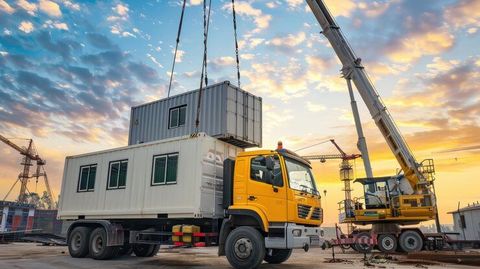
Mobile cranes are lifting machines designed to move heavy materials and equipment from one location to another. Unlike fixed tower cranes, mobile cranes are mounted on wheeled or tracked carriers, allowing them to travel between different working locations.
They are widely used in construction, infrastructure development, manufacturing, transportation, mining, and industrial maintenance.
Mobile cranes generally use a combination of hydraulic systems, telescopic or lattice booms, counterweights, lifting hooks, and stabilizing equipment to perform lifting operations.
Their mobility makes them useful at locations where permanent lifting structures are impractical or where construction activities require equipment to be repositioned regularly.
How Do Mobile Cranes Work?
A mobile crane uses mechanical and hydraulic systems to lift, lower, and position loads.
Its main components include:
Carrier: The wheeled or tracked base that supports the crane.
Boom: The long structural arm used to reach and lift loads.
Hydraulic System: Controls several lifting and boom movement functions.
Counterweights: Help balance the crane during lifting operations.
Outriggers: Extendable supports that improve stability when required.
Hoist: Raises and lowers suspended loads using a wire rope.
Hook Block: Connects the lifting arrangement to the load.
Load Moment Indicator: Helps monitor operating conditions and warns when specified limits are approached.
Crane lifting capacity depends on several factors, including boom length, working radius, ground conditions, crane configuration, and outrigger arrangement.
Importance of Mobile Cranes in Modern Industries
Why Mobile Cranes Matter
Modern construction and infrastructure projects involve materials and equipment that are too heavy or difficult to move manually.
Mobile cranes help perform controlled lifting operations in environments where large components must be positioned accurately.
They are particularly important in projects involving high-rise buildings, bridges, highways, industrial facilities, power plants, and renewable energy infrastructure.
Their main advantages include:
Handling heavy construction materials.
Positioning structural steel and concrete components.
Moving industrial machinery.
Supporting infrastructure development.
Assisting equipment installation and maintenance.
Reducing dependence on manual material handling.
Improving productivity in suitable lifting operations.
Industries That Use Mobile Cranes
Mobile cranes support a wide range of industrial activities.
Construction Industry: Used for lifting steel structures, concrete components, building materials, and prefabricated sections.
Road and Bridge Infrastructure: Assist in positioning bridge girders, structural components, and heavy construction equipment.
Manufacturing: Help move machinery, production equipment, and large industrial components.
Oil and Gas: Support equipment installation and maintenance at industrial facilities.
Power Generation: Used during installation and maintenance of turbines, transformers, and other heavy equipment.
Renewable Energy: Support wind turbine component installation and other large infrastructure activities.
Ports and Logistics: Assist with handling heavy cargo and industrial materials where suitable crane configurations are available.
Common Types of Mobile Cranes
Different crane designs are developed for specific working environments and lifting requirements.
Crane Type
Main Characteristics
Common Applications
Truck-Mounted Crane
Mounted on a road-going truck chassis
Construction and transportation
All-Terrain Crane
Designed for road travel and challenging site conditions
Infrastructure and industrial projects
Rough-Terrain Crane
Built for uneven construction sites
Remote and rugged locations
Crawler Crane
Uses tracked undercarriage
Heavy construction and industrial lifting
Hydraulic Mobile Crane
Uses hydraulic systems for lifting and boom movement
General construction
Telescopic Crane
Uses extendable boom sections
Flexible lifting operations
Each type has different mobility, stability, reach, and lifting characteristics. Selecting a suitable crane requires an assessment of the actual worksite and load requirements.
Recent Developments and Trends in Mobile Crane Technology
Technological Developments During 2025–2026
The mobile crane industry is gradually incorporating digital monitoring, improved hydraulic systems, automation, and more efficient engine technologies.
Several developments are influencing equipment design and construction operations.
1. Advanced Hydraulic Systems
Modern hydraulic mobile cranes use improved control systems to support smoother boom movement, lifting, and load positioning. These systems can help improve operational precision when used according to manufacturer specifications.
2. Digital Load Monitoring
Electronic load monitoring systems provide information about lifting conditions, boom angles, operating radius, and safe working limits.
Some modern cranes also incorporate telematics to monitor equipment performance and maintenance requirements.
3. Emission Control Technology
Engine emission requirements are influencing construction equipment design in India. Manufacturers are adapting engine technologies to meet applicable emission standards.
4. Electrification and Hybrid Technology
Electric and hybrid crane technologies are receiving attention as industries examine ways to reduce fuel consumption, noise, and operational emissions. Their suitability depends on lifting capacity, operating duration, charging infrastructure, and worksite conditions.
Indian Mobile Crane Industry Developments
On October 26, 2026, industry research published by Off-Highway Research reported that mobile crane sales in India reached 15,185 units during 2025.
The report also identified emission-standard changes introduced from January 2025 as an important factor influencing production and sales patterns.
This reflects the relationship between regulatory requirements, equipment manufacturing, and construction industry demand.
Laws and Safety Regulations Affecting Mobile Cranes in India
Occupational Safety, Health and Working Conditions Code, 2020
The Occupational Safety, Health and Working Conditions Code, 2020, became effective on November 21, 2025.
The Code establishes a broader framework for workplace safety, occupational health, and working conditions. Its provisions are relevant to construction and industrial workplaces where lifting equipment is operated.
Employers and responsible workplace authorities must consider applicable safety requirements, worker training, equipment maintenance, and risk prevention measures.
+1Mines Safety Regulations
Mobile cranes used in mining operations are subject to specific safety requirements.
The mining-related provisions published in India's Gazette in November 2025 address important crane safety measures, including:
Displaying a legible crane load chart.
Providing safe load indicators.
Installing load radius indicators.
Using boom angle indicators.
Providing appropriate warning alarms.
Ensuring that trained and competent operators handle cranes.
Maintaining inspection and examination records.
Using suitable lifting slings and attachments.
These requirements are particularly relevant to mobile crane operations in regulated mining environments.
Bureau of Indian Standards
The Bureau of Indian Standards (BIS) develops technical standards covering machinery, equipment, and industrial safety.
IS 4573 is an Indian Standard associated with power-driven mobile cranes. Relevant standards should be checked for their current editions and applicability to the specific equipment.
The Ministry of Heavy Industries also maintains information concerning machinery safety regulations. Its official records show that the Machinery and Electrical Equipment Safety (Omnibus Technical Regulation) Order, 2024, was withdrawn on January 16, 2026. Therefore, its earlier proposed implementation dates should not be treated as current mandatory requirements.
+2General Crane Safety Practices
Regardless of the specific industry, responsible crane operation requires appropriate planning and supervision.
Important practices include:
Inspecting the crane before operation.
Checking the manufacturer's load chart.
Assessing ground stability and supporting conditions.
Positioning outriggers according to the operating instructions.
Maintaining safe distances from overhead electrical lines.
Using trained operators and qualified signal personnel.
Keeping workers away from suspended loads.
Avoiding lifting beyond the crane's rated capacity.
Applicable national, state, and industry-specific regulations should always be checked before crane operations begin.
Tools and Resources for Mobile Crane Planning
Several technical resources help engineers, operators, and construction managers understand crane capacity, equipment condition, and lifting requirements.
1. Crane Load Charts
A crane load chart provides information about the maximum permitted lifting capacity under specified operating configurations.
It generally considers:
Boom length.
Working radius.
Boom angle.
Counterweight configuration.
Outrigger position.
Crane operating mode.
Load charts must always be interpreted according to the manufacturer's instructions. Rated capacities should never be estimated from general specifications alone.
2. Crane Capacity Calculators
Crane capacity calculation tools can assist with preliminary lifting assessments.
Common information considered includes:
Load weight.
Lifting radius.
Boom configuration.
Rigging weight.
Crane model.
Site conditions.
Online calculators should not replace the manufacturer's load chart or a competent person's lifting assessment.
3. Digital Maintenance Management Tools
Computerized maintenance management systems (CMMS) help organizations maintain equipment records and plan inspections.
Useful features include:
Maintenance schedules.
Inspection records.
Equipment service history.
Defect reporting.
Component replacement records.
Maintenance reminders.
4. GPS and Telematics Systems
GPS and telematics technologies help monitor equipment location, operating hours, fuel consumption, and machine performance.
These systems can support equipment management and maintenance planning.
5. Important Technical Resources
The following institutions provide relevant technical information:
Bureau of Indian Standards: Indian machinery and equipment standards.
Directorate General of Factory Advice Service and Labour Institutes: Industrial safety guidance and technical information.
Directorate General of Mines Safety: Mining equipment safety and regulatory guidance.
Ministry of Labour and Employment: Occupational safety and workplace regulations.
Ministry of Heavy Industries: Machinery and construction equipment regulatory information.
Frequently Asked Questions About Mobile Cranes
1. What Is the Main Purpose of a Mobile Crane?
A mobile crane is primarily used to lift, lower, and position heavy materials and equipment. Its movable design allows it to operate at different construction sites, industrial facilities, and infrastructure projects.
2. What Are the Main Types of Mobile Cranes?
Common types include truck-mounted cranes, all-terrain cranes, rough-terrain cranes, crawler cranes, hydraulic cranes, and telescopic cranes. Each type is designed for particular lifting requirements and working environments.
3. How Is Mobile Crane Lifting Capacity Determined?
Lifting capacity depends on the crane model, boom length, working radius, counterweight arrangement, outrigger configuration, and ground conditions. The manufacturer's load chart determines the permitted capacity for a particular configuration.
4. What Safety Equipment Is Important for Mobile Cranes?
Important safety equipment includes load moment indicators, safe load indicators, boom angle indicators, warning alarms, suitable lifting slings, emergency controls, and outrigger systems. Specific equipment requirements depend on crane design and applicable regulations.
5. How Often Should Mobile Cranes Be Inspected?
Mobile cranes should undergo pre-operation inspections, scheduled maintenance, and periodic examinations according to manufacturer recommendations and applicable regulations. Additional inspections may be necessary following major repairs, modifications, unusual incidents, or suspected equipment damage.
Conclusion
Mobile cranes are important machines in modern construction, infrastructure, manufacturing, mining, and industrial operations. Their mobility, lifting capacity, and adaptable configurations make them suitable for handling heavy materials in different working environments.
Understanding the various types of mobile cranes, their technical components, operating limitations, and safety requirements helps construction professionals make informed equipment decisions.
Recent developments in hydraulic technology, digital monitoring, emission control, and equipment automation are also influencing the future of mobile crane operations.
In India, workplace safety legislation, mining regulations, and applicable BIS standards provide important frameworks for responsible crane use.
Ultimately, effective mobile crane operations depend on suitable equipment selection, proper maintenance, trained operators, accurate load assessment, and consistent attention to workplace safety.

Related Post...

Slotting Machines: Uses, Working, Types and Industrial Applications
Updated: November 25, 2026
Read More