Drilling Machines: Types, Uses, and Modern Developments
Drilling machines form a core part of metalworking, construction, and manufacturing processes. These tools create precise holes in materials such as metal, wood, concrete, and composites by rotating a cutting bit against a fixed workpiece. They range from compact bench models used in small workshops to large radial and CNC systems that handle heavy industrial components.
The need for accurate, repeatable holes has existed for centuries. Early versions relied on manual force or simple water-powered mechanisms. Industrial growth in the nineteenth and twentieth centuries demanded greater speed, consistency, and power, leading to motor-driven and later computer-controlled designs. Today, drilling machines support everything from furniture assembly to aerospace component production because they deliver controlled material removal that hand tools cannot match at scale.
Why Drilling Machines Remain Essential
Accurate hole placement affects product strength, assembly fit, and overall performance. In automotive and aerospace manufacturing, thousands of holes must meet tight tolerances so that fasteners, rivets, and fluid passages align correctly. Construction and infrastructure projects rely on core drilling and foundation equipment to prepare sites without excessive material waste.
These machines solve several practical problems. They reduce human error in repetitive tasks, allow consistent results across large batches, and enable work on materials that are too hard or thick for handheld tools. Workers in fabrication shops, maintenance teams, and engineering facilities depend on them daily. The equipment also supports specialized needs such as deep-hole drilling for hydraulic components or multi-spindle setups that produce several holes in one cycle.
As production volumes rise and material varieties expand, the ability to maintain precision while controlling heat, chip removal, and surface finish becomes increasingly important.
Recent Developments in Drilling Technology
Automation and digital integration have advanced rapidly. In 2025 and 2026, manufacturers introduced equipment with improved control systems and reduced setup times. Foundation contractors began using the Liebherr LRB 19 piling and drilling rig, first shown at Bauma Munich in 2025, which supports full-displacement techniques that leave less spoil on site.
Underground mining saw the release of Sandvik’s DD423i automated development drill in early 2026. The model increased drilling coverage by more than 30 percent compared with earlier versions and improved cross-cut performance through dual roll-over booms. Operators can prepare the machine for remote or battery-electric platforms as mines shift toward lower-emission fleets.
Broader industry trends include greater use of hybrid power systems and AI-assisted monitoring. Automated land and offshore rigs now incorporate real-time data analysis that adjusts parameters during operation, cutting non-productive time. Robotic drilling equipment markets expanded, with North America holding a significant share of early adoption. High-specification systems capable of handling complex geological or structural conditions continue to draw attention across energy and construction sectors.
These changes focus on measurable gains in consistency, operator safety, and energy efficiency rather than radical redesigns of basic drilling principles.
Safety Standards and Regulatory Requirements
In the United States, the Occupational Safety and Health Administration sets clear rules for machine operation. OSHA standard 29 CFR 1910.212 requires guarding that protects workers from rotating parts, flying chips, and point-of-operation hazards on all machines, including drill presses and radial drills. Power-transmission components such as belts and pulleys fall under 1910.219 and must receive inspection at intervals not exceeding 60 days.
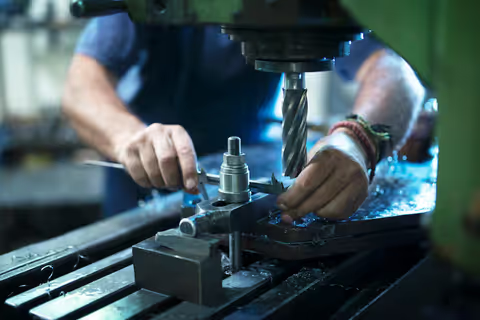
Operators must secure workpieces with clamps rather than holding them by hand while the bit turns. Guarding must cover the chuck and unused portions of the bit. Training covers proper bit selection, pre-use inspection, recognition of reaction torque, and personal protective equipment. When silica-generating materials are involved, additional controls under 29 CFR 1926.1153 apply.
Lockout/tagout procedures under 1910.147 govern maintenance so that energy sources remain isolated. These rules apply across general industry and construction settings. Similar principles appear in international standards such as ANSI B11 series for machine tools, which address milling, drilling, and boring equipment. Compliance reduces the risk of entanglement, struck-by injuries, and electrical incidents.
Helpful Tools and Supporting Resources
Several practical aids support effective use of drilling machines.
- CNC programming software packages that generate tool paths and simulate hole sequences before material is cut
- Digital readout systems and laser alignment devices that improve positioning accuracy on radial and upright models
- Manufacturer operation manuals that detail torque limits, speed charts, and maintenance intervals for specific spindle and table designs
- Material selection charts listing recommended speeds and feeds for different metals, plastics, and composites
- Chip-removal systems and coolant delivery units that maintain tool life and surface quality during continuous operation
- Inspection templates and checklists used to verify guard integrity, bit condition, and workpiece clamping before each shift
These resources help operators match machine capability to the workpiece and maintain consistent results over time.
Common Questions About Drilling Machines
What is the difference between a pillar drill and a radial drilling machine?
A pillar or upright drill keeps the spindle fixed in a vertical column while the table moves. A radial drilling machine features an arm that swings and slides, allowing the head to reach multiple locations on a large or heavy workpiece without repositioning the material.
When is a CNC drilling machine preferred?
CNC models suit high-volume or high-precision work. A programmed sequence controls speed, feed rate, and position automatically, reducing variation between parts and enabling complex hole patterns that would take longer to set up manually.
How does deep-hole drilling differ from standard drilling?
Deep-hole operations typically involve depth-to-diameter ratios greater than 10:1. Specialized machines use gun drills or BTA systems with continuous coolant flow through the tool to clear chips and control temperature over long distances.
What safety steps should operators follow before starting work?
Inspect the bit, chuck, and guards. Secure the workpiece firmly. Select the correct speed and feed for the material. Wear eye and hearing protection. Keep loose clothing and jewelry clear of rotating parts. Confirm that emergency stops function properly.
Can the same machine handle both metal and concrete?
Most metalworking drills are not designed for masonry. Core drilling machines with diamond bits and specialized motors handle concrete and stone. Using the wrong machine for the material leads to rapid tool wear and possible damage to the spindle.
Looking Ahead
Drilling machines continue to evolve through incremental improvements in control systems, energy use, and operator interfaces. Automation reduces exposure to repetitive strain and flying debris while supporting higher throughput in manufacturing and construction. Safety standards remain the foundation for reliable operation, and ongoing attention to training and guarding keeps workplaces productive.
Understanding the basic types, their applications, and the regulatory framework allows users to select and operate equipment that meets both technical requirements and workplace safety expectations. As materials and production methods change, the fundamental task of creating accurate holes will stay central to industrial processes.

Related Post...