Slotting Machines: Uses, Working, Types and Industrial Applications
Slotting machines are industrial machine tools designed to remove material from a workpiece and create slots, grooves, keyways, internal profiles, and other shaped surfaces. They are commonly used in metalworking and mechanical engineering industries where accurate cutting and shaping are necessary.
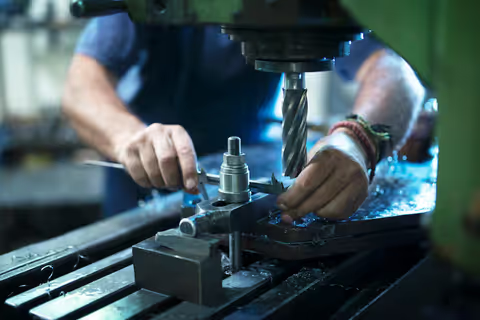
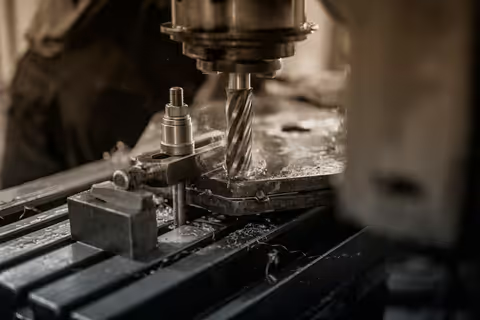
A slotting machine operates through a reciprocating cutting tool that moves vertically or in a controlled direction. During the cutting stroke, the tool removes a small amount of material from the workpiece. The return stroke prepares the machine for the next cutting operation.
These machines are particularly useful for producing internal features that may be difficult to create using conventional milling or turning equipment.
Slotting machines have existed for many years and remain relevant because they can perform specific machining operations with relatively straightforward mechanical arrangements.
Why Were Slotting Machines Developed?
Industrial manufacturing requires components with accurate dimensions and carefully shaped surfaces. Mechanical assemblies often contain keyways, internal grooves, splines, and other features that allow different parts to connect and function correctly.
Traditional hand-operated methods were not always suitable for producing these features consistently.
Slotting machines addressed this requirement by introducing controlled cutting movements. Their development helped manufacturers improve dimensional accuracy, repeatability, and production efficiency in various engineering applications.
Today, conventional and computer-controlled versions are used according to the complexity and requirements of manufacturing operations.
Main Types of Slotting Machines
Different slotting machines are designed for different machining requirements.
Vertical Slotting Machine: Uses a vertically moving cutting tool to produce internal grooves, keyways, and shaped surfaces.
Precision Slotting Machine: Designed for machining operations that require close dimensional control.
CNC Slotting Machine: Uses computer numerical control to manage cutting movements and improve machining repeatability.
Hydraulic Slotting Machine: Uses hydraulic power to control the reciprocating movement of the cutting mechanism.
Heavy-Duty Slotting Machine: Designed for larger workpieces and demanding industrial machining applications.
How Does a Slotting Machine Work?
The working principle of a slotting machine is based on reciprocating motion. A cutting tool moves repeatedly across a workpiece to remove unwanted material.
The general machining process involves the following steps:
The workpiece is positioned and secured on the machine table.
The cutting tool is installed in the tool holder.
The operator adjusts the cutting stroke and required machining settings.
The machine moves the cutting tool through the material during the cutting stroke.
The tool returns during the idle stroke.
The workpiece is adjusted gradually until the required shape and dimensions are achieved.
The cutting speed, feed rate, tool geometry, and material properties influence the final machining result.
Typical slotting machine components and their functions
Component | Main function |
|---|---|
Base | Supports the machine structure |
Column | Houses the main driving mechanism |
Ram | Provides reciprocating movement |
Tool head | Holds and positions the cutting tool |
Worktable | Supports the workpiece |
Clamping system | Secures the material |
Drive mechanism | Controls the cutting movement |
Importance of Slotting Machines in Modern Industry
Why Do Slotting Machines Matter Today?
Modern manufacturing depends on components that fit together accurately and operate reliably. Even a small dimensional error in a mechanical part can affect the performance of an entire assembly.
Slotting machines help manufacturers produce specific shapes and internal features required for mechanical connections.
Their importance extends across several industrial sectors.
Automotive Manufacturing
Automotive components often require keyways, internal grooves, and accurately shaped mechanical features. Slotting machines support the machining of selected transmission, gear, and mechanical assembly components.
Heavy Engineering
Heavy engineering facilities use different machining technologies to manufacture large mechanical components. Slotting machines can handle certain internal shaping and groove-cutting operations.
Aerospace Manufacturing
Aerospace engineering requires accurate components and strict manufacturing controls. Specialized slotting operations may be used where component geometry and approved manufacturing procedures require them.
Tool and Die Manufacturing
Toolrooms use slotting machines for shaping dies, fixtures, and specialized components. Their ability to machine internal profiles makes them useful in certain toolmaking applications.
General Mechanical Engineering
Small and medium-sized engineering workshops use conventional slotting machines for maintenance, component production, and specialized machining operations.
Problems Addressed by Slotting Machines
Slotting machines address several practical manufacturing challenges:
Producing internal keyways and grooves.
Creating specific profiles in metal components.
Machining surfaces that are difficult to reach with other equipment.
Supporting repeatable machining operations.
Reducing dependence on certain manual shaping methods.
Maintaining dimensional consistency when machines are correctly adjusted.
However, slotting machines are not suitable for every machining task. Milling, broaching, shaping, and electrical discharge machining may be more appropriate depending on component geometry, material, accuracy requirements, and production volume.
Conventional Versus CNC Slotting Machines
Feature | Conventional machine | CNC machine |
|---|---|---|
Operation | Manual adjustments | Computer-controlled |
Movement | Mechanically controlled | Programmed movement |
Repeatability | Depends on operator and setup | Supports programmed consistency |
Complexity | Relatively simple | More advanced |
Applications | General machining | Specialized and repeated operations |
Operator involvement | Higher manual involvement | Programming and monitoring |
The choice depends on production requirements, available technical skills, component complexity, and manufacturing objectives.
Recent Updates and Technology Trends
Developments in the Machine Tool Industry During 2025–2026
Although there has not been a major slotting-machine-specific technological announcement that defines the entire industry, wider machine tool developments are influencing how manufacturers approach machining equipment.
Several important trends are shaping the sector.
1. Greater Adoption of CNC Technology
Computer numerical control is becoming increasingly important in precision manufacturing. Manufacturers are adopting automated machining systems to improve repeatability, manage complex movements, and reduce unnecessary manual adjustments.
2. Smart Manufacturing and Digital Monitoring
Digital monitoring systems help manufacturing facilities track machine performance, operating conditions, and maintenance requirements.
These technologies can support predictive maintenance and help identify equipment problems before they cause significant production interruptions.
3. Growth in India's Machine Tool Industry
The Indian Machine Tool Manufacturers' Association (IMTMA) reported that India's machine tool production reached approximately ₹17,387 crore in FY 2025–26, representing 19% growth compared with the previous financial year.
Machine tool consumption reached approximately ₹36,419 crore, an increase of 15%.
These figures indicate growing activity across India's wider machine tool industry, although they do not represent slotting machines alone.
4. Increased Focus on Machine Safety
Manufacturers are paying greater attention to machine guarding, electrical safety, risk assessment, and operator training.
This trend is particularly relevant to conventional slotting machines because their reciprocating movements create mechanical hazards around the cutting area.
5. Precision Engineering and Automation
Industrial manufacturers increasingly combine precision machining with automated inspection, digital measurement, and controlled production processes.
These developments can improve the consistency of components manufactured through different machining methods.
Laws, Policies, and Safety Regulations in India
Government Regulations Affecting Slotting Machines
Slotting machines used in Indian manufacturing facilities are affected by industrial safety requirements, machinery standards, and workplace regulations.
These rules help protect machine operators, maintenance personnel, and other workers from avoidable workplace hazards.
1. Machinery and Electrical Equipment Safety Regulations
The Ministry of Heavy Industries introduced the Machinery and Electrical Equipment Safety (Omnibus Technical Regulation) Order, 2024.
The order establishes safety and conformity requirements for specified categories of machinery and electrical equipment. It refers to applicable Indian Standards, including general machinery risk assessment and risk reduction principles.
An important development occurred on 13 November 2025, when the Second Amendment Order changed the implementation date to a date that would be notified separately by the Central Government.
Therefore, manufacturers should check the latest government notifications to establish whether particular machinery is covered and when the relevant requirements apply. Not every slotting machine should automatically be assumed to fall within the order's scope.
2. Occupational Safety, Health and Working Conditions Code, 2020
India's Occupational Safety, Health and Working Conditions Code became effective on 21 November 2025.
It consolidates several central labour laws and establishes workplace health and safety responsibilities for employers.
For facilities operating slotting machines, important considerations include:
Maintaining safe machinery and working environments.
Providing appropriate operator training.
Identifying workplace hazards.
Maintaining suitable protective equipment.
Establishing safety procedures and emergency arrangements.
The applicable central and state rules should also be considered.

3. Bureau of Indian Standards (BIS)
BIS develops Indian Standards covering machinery safety, product quality, and engineering requirements.
IS 16819:2018, aligned with ISO 12100:2010, provides general principles for machinery risk assessment and risk reduction.
Manufacturers should identify the standards applicable to their particular machine category and configuration.
Important Safety Practices
Regardless of the machine's regulatory classification, responsible operation requires attention to basic safety measures.
Inspect the cutting tool and machine before operation.
Keep appropriate guards in position.
Secure workpieces properly.
Avoid loose clothing near moving components.
Use suitable eye and face protection.
Disconnect power before maintenance.
Follow the manufacturer's operating instructions.
Keep the working area clean and free from obstructions.
Tools and Resources for Slotting Machine Operations
Helpful Industrial Tools and Digital Resources
Manufacturers, engineers, workshop supervisors, and technical students can use several resources to understand and manage slotting machine operations.
Tool or resource | Main purpose |
|---|---|
CAD software | Preparing engineering drawings |
CAM software | Planning machining operations |
CNC programming software | Creating and managing machine programs |
Digital vernier caliper | Measuring external and internal dimensions |
Micrometer | Checking component dimensions accurately |
Surface roughness tester | Evaluating machined surface quality |
Cutting speed calculator | Estimating machining parameters |
Maintenance checklist | Recording inspections and maintenance |
Machine manuals | Understanding machine operation and specifications |
Useful Software and Technical Resources
AutoCAD: Used for preparing and interpreting engineering drawings and component dimensions.
SolidWorks: Supports three-dimensional mechanical design and component modelling.
Fusion: Provides CAD and CAM capabilities for engineering design and machining preparation.
Mastercam: Used in computer-aided manufacturing and CNC programming workflows.
BIS Standards Portal: Helps manufacturers and engineering professionals identify relevant Indian Standards and certification information.
IMTMA: Provides information about India's machine tool industry, technical developments, industry statistics, and manufacturing activities.
Important Machining Parameters
Selecting appropriate machining parameters is important for achieving the required surface quality and dimensional accuracy.
Parameter | Description |
|---|---|
Cutting speed | Speed at which the cutting tool removes material |
Feed rate | Rate of relative movement between tool and workpiece |
Stroke length | Total distance covered by the reciprocating tool |
Depth of cut | Thickness of material removed during a cutting pass |
Tool geometry | Shape and cutting characteristics of the tool |
Workpiece material | Material being machined |
These parameters should be selected according to the machine manufacturer's instructions, cutting tool specifications, and workpiece material.
Frequently Asked Questions About Slotting Machines
1. What Is the Main Purpose of a Slotting Machine?
The main purpose of a slotting machine is to produce slots, keyways, grooves, and internal profiles in metal components. It uses a reciprocating cutting tool to remove unwanted material and achieve the required shape.
2. What Are the Different Types of Slotting Machines?
Common types include vertical slotting machines, precision slotting machines, CNC slotting machines, hydraulic slotting machines, and heavy-duty slotting machines. Each type is designed for particular machining requirements.
3. What Materials Can Be Machined Using a Slotting Machine?
Depending on machine capacity and cutting tool specifications, slotting machines can work with materials such as mild steel, cast iron, aluminium, brass, and certain alloy steels.
The correct cutting tool and machining parameters must be selected for each material.
4. What Is the Difference Between a Slotting Machine and a Shaping Machine?
A slotting machine generally uses a vertically reciprocating cutting tool, while a shaping machine typically uses a horizontally reciprocating cutting tool.
Both machines remove material through a similar cutting principle, but their movement arrangements and common applications differ.
5. Are CNC Slotting Machines More Accurate Than Conventional Machines?
CNC slotting machines can provide better repeatability when correctly programmed, configured, and maintained.
However, actual machining accuracy depends on machine construction, tool condition, workpiece setup, programming, and measurement practices. A properly maintained conventional machine can also produce accurate components.
Conclusion
Slotting machines continue to play an important role in metalworking and mechanical engineering. Their ability to produce internal grooves, keyways, slots, and specialized profiles makes them useful for various industrial applications.
Although modern manufacturing increasingly uses CNC systems, automation, and advanced machining technologies, conventional slotting machines remain relevant for selected machining operations.
Understanding their working principles, machine types, industrial applications, and safety requirements helps manufacturers and engineering professionals make informed decisions about machining processes.
In India, developments in machine tool manufacturing, machinery safety standards, and workplace regulations are also influencing the wider industrial environment.
As manufacturing technology continues to advance, slotting machines are likely to remain part of the broader range of equipment used for specialized metalworking operations.
Additional SEO Metadata
Article Title: Slotting Machines: Working Principles, Types, Uses, and Industrial Applications
Focus Keyword: Slotting Machines
SEO Keyword Variations: Industrial Slotting Machines, CNC Slotting Machine, Metal Cutting Machines, Slotting Machine Working Principle, Precision Engineering, Metalworking Technology.
Article Category: Industrial Machinery and Manufacturing
Target Audience: Engineering students, machine operators, manufacturers, mechanical engineers, and industrial professionals.
Language: English
Content Tone: Neutral, educational, and informative
Suggested URL Slug:
slotting-machines-working-principles-types-uses

Related Post...

Slotting Machines: Uses, Working, Types and Industrial Applications
Updated: November 25, 2026
Read More