Explore Mine Drilling Rigs and Their Industrial Applications
Mine Drilling rigs are specialised machines used to create holes in rock formations during mining and mineral exploration. They support activities such as geological investigation, underground development, rock reinforcement, and mineral extraction. People often search for mine drilling equipment to understand its types, applications, and working principles. This guide explains how drilling rigs operate, their major components, industrial uses, and safety requirements in India.
Key Takeaways
- Mine drilling rigs create holes for mineral exploration and mining operations.
- Surface and underground rigs have different designs and applications.
- Hydraulic, pneumatic, and rotary systems support different drilling methods.
- Regular inspections help maintain equipment condition and workplace safety.
Related Searches
What are mine drilling rigs and how do they work?
What are the different types of mining drilling rigs?
How does underground mine drilling work?
What is the difference between surface and underground drilling rigs?
Where are mining drilling machines used?
What safety measures apply to mine drilling equipment?
In This Guide
- What Are Mine Drilling Rigs and How Do They Work?
- Why Are Mine Drilling Rigs Important in Mining Operations?
- Recent Developments in Mine Drilling Technology
- Mine Drilling Safety Rules and Regulations in India
- Types of Mine Drilling Rigs: Comparison and Overview
- Tools and Resources for Understanding Mine Drilling
- Frequently Asked Questions About Mine Drilling
- Conclusion
What Are Mine Drilling Rigs and How Do They Work?
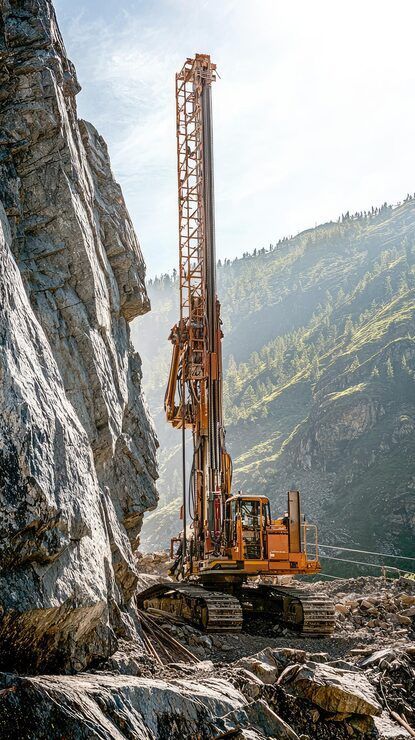
Mine drilling rigs are mechanical systems designed to create holes in rock and other geological formations. They are used in surface mines, underground mines, mineral exploration projects, and tunnelling operations.
Mining activities require drilling for several purposes, including geological sampling, mine development, ground investigation, and production planning. Different drilling rigs are designed according to rock conditions, working space, drilling direction, and the intended application.
How Do Mine Drilling Rigs Work?
A typical drilling rig uses a power source, a drilling mechanism, and specialised tools to penetrate rock. Its general operating process involves the following stages:
- Positioning: The rig is placed and stabilised at an approved drilling location.
- Equipment inspection: Operators examine the machine, controls, connections, and surrounding work area.
- Mechanical operation: The drilling system transfers controlled mechanical energy to the drilling tool.
- Rock penetration: The drilling tool breaks or cuts the rock through an appropriate drilling method.
- Material removal: A suitable flushing or removal system clears cuttings from the drilling area.
- Monitoring: Operators observe equipment condition and drilling progress according to approved procedures.
The exact arrangement varies between drilling methods. Rotary systems use rotational movement, while percussive systems use repeated impacts to break rock.
What Are the Main Components of a Mine Drilling Rig?
The main components commonly include:
- Drill mast: Supports and guides the drilling assembly.
- Drill rod: Connects the drilling mechanism to the drilling tool.
- Drill bit: Contacts the rock and performs the drilling action.
- Power unit: Supplies mechanical or hydraulic energy.
- Control system: Allows operators to monitor and manage machine functions.
- Flushing system: Helps remove drilling cuttings where required.
- Supporting frame: Provides structural stability during operation.
Component arrangements depend on the rig design and its intended mining application.
Why Are Mine Drilling Rigs Important in Mining Operations?
Mine drilling rigs support several stages of mining, from initial geological investigation to underground development and production-related activities. They help mining companies examine rock formations and prepare areas for further engineering work.
These machines are used in coal mines, metal mines, mineral exploration projects, quarry operations, and underground infrastructure development.
What Problems Do Mine Drilling Rigs Address?
- Geological exploration: Create boreholes for collecting rock samples and examining underground formations.
- Mine development: Support drilling activities associated with tunnels and underground openings.
- Ground investigation: Help assess geological structures and rock conditions.
- Ground reinforcement: Specialised rigs support the installation of rock bolts and ground-support systems.
- Mineral extraction planning: Provide geological information that helps engineers understand mineral deposits.
- Underground access: Certain drilling systems support the development of vertical or inclined connections.
Different mining conditions require different equipment arrangements. Surface mines generally provide more working space, whereas underground mines require compact machines that can operate within restricted tunnels.
Where Are Mine Drilling Rigs Commonly Used?
Their applications vary across several industrial activities:
- Coal mining: Used for geological investigation and mine development.
- Metal mining: Support exploration and drilling associated with mineral deposits.
- Quarrying: Used for geological assessment and rock extraction operations.
- Underground construction: Support tunnelling and ground investigation.
- Mineral exploration: Help collect rock samples to examine geological formations.
The drilling method depends on the required information, rock characteristics, and project conditions.
Recent Developments in Mine Drilling Technology
Mine drilling technology is increasingly incorporating automation, electronic monitoring, and improved operator controls. Developments during 2024–2026 reflect the wider use of digital systems in mining equipment.
What Are the Latest Trends in Mine Drilling Rigs?
- Automated drilling systems: Computer-controlled functions help manage selected drilling operations.
- Remote operation: Some rigs allow operators to monitor equipment from designated control locations.
- Digital monitoring: Sensors collect information about equipment temperature, vibration, and operating conditions.
- Electric-powered equipment: Battery-powered and electrically driven rigs are being developed for selected mining environments.
- Improved operator cabins: Ergonomic controls and visibility features support operator awareness.
- Predictive maintenance: Equipment monitoring helps identify unusual operating conditions that may require inspection.
The adoption of these technologies varies according to mine conditions, equipment design, available infrastructure, and regulatory requirements.
Mine Drilling Safety Rules and Regulations in India
Mining operations in India are regulated through legislation covering worker safety, machinery, environmental protection, and operational procedures. The Directorate General of Mines Safety (DGMS), under the Ministry of Labour and Employment, oversees occupational safety and health matters in mines.
Which Indian Regulations Apply to Mine Drilling?
Important regulatory frameworks include:
- Mines Act, 1952: Establishes legal provisions relating to mine worker safety and health.
- Coal Mines Regulations, 2017: Covers safety requirements and operational controls in coal mines.
- Metalliferous Mines Regulations, 1961: Addresses safety and operating requirements in metalliferous mines.
- Oil Mines Regulations, 2017: Establishes requirements for drilling and other activities in oil mines.
- Mines Rules, 1955: Covers various workplace and health-related requirements.
- Electricity Act, 2003: Provides the broader framework for electrical safety, alongside applicable electricity regulations.
DGMS issues technical circulars, safety guidance, and regulatory instructions relevant to mining activities.
What Safety Precautions Are Important During Drilling?
Important precautions include:
- Inspecting drill rods, connections, hydraulic lines, and machine controls.
- Providing suitable protective equipment to workers.
- Maintaining safe distances from rotating and moving components.
- Monitoring ground stability and surrounding geological conditions.
- Controlling dust, noise, and equipment vibration.
- Following approved operating procedures and emergency arrangements.
Underground drilling also requires appropriate ventilation, lighting, communication, and monitoring of atmospheric conditions.
Types of Mine Drilling Rigs: Comparison and Overview
Mine drilling rigs are classified according to their location, drilling mechanism, and intended application. Surface and underground machines have different structural arrangements because their working environments are different.
What Are the Different Types of Mine Drilling Rigs?
| Rig type | Main application | General characteristic |
|---|---|---|
| Surface drilling rig | Open-pit mining | Designed for outdoor operations |
| Underground drilling rig | Underground mines | Compact machine arrangement |
| Exploration drilling rig | Geological investigation | Supports rock sampling |
| Rotary drilling rig | Rock penetration | Uses rotational movement |
| Percussion drilling rig | Rock penetration | Uses repeated mechanical impacts |
| Longhole drilling rig | Underground production | Designed for long boreholes |
| Jumbo drilling rig | Tunnel development | Uses one or multiple drilling booms |
| Rock bolting rig | Ground reinforcement | Supports rock bolt installation |
Surface vs Underground Mine Drilling Rigs: What Is the Difference?
Surface drilling rigs: These machines operate in open mining areas and generally have larger frames and greater movement space. They are used for exploration, geological investigation, and other surface mining activities.
Underground drilling rigs: These machines are designed for restricted working environments. Their compact dimensions, steering arrangements, and operator controls allow movement through underground mine passages.
The choice depends on drilling requirements, geological conditions, available space, and mine layout.
Tools and Resources for Understanding Mine Drilling
Technical resources help engineers and mining personnel understand drilling conditions, equipment performance, and geological information.
- CAD software: AutoCAD and SolidWorks help prepare equipment layouts and mechanical drawings.
- Drilling calculation tools: Assist with estimating drilling parameters and equipment requirements.
- Geological mapping software: Leapfrog Geo supports geological modelling and visualisation.
- Vibration monitoring instruments: Help identify unusual mechanical movement.
- Hydraulic pressure gauges: Monitor pressure within hydraulic systems.
- DGMS publications: Provide information about Indian mining regulations and safety requirements.
- Geological Survey of India resources: Provide geological maps and information about mineral resources.
These resources support different technical activities. Their application depends on the drilling method, mine conditions, and engineering requirements.
Frequently Asked Questions About Mine Drilling
1. What are mine drilling rigs used for?
They create holes in rock for mineral exploration, mine development, geological investigation, and ground reinforcement.
2. What are the main types of mine drilling rigs?
Common types include surface rigs, underground rigs, exploration rigs, jumbo drills, and longhole drilling machines.
3. How do mine drilling rigs work?
They use rotary or percussive mechanisms to penetrate rock with specialised drilling tools.
4. What is the difference between surface and underground drilling rigs?
Surface rigs operate in open mining areas, while underground rigs are designed for restricted spaces.
5. What safety measures are required during mine drilling?
Important measures include equipment inspections, protective equipment, ventilation, dust control, and compliance with applicable mining regulations.
Conclusion
Mine drilling rigs play an important role in mineral exploration, mine development, and geological investigation. Their types and operating mechanisms vary according to mining conditions and drilling requirements. Automation, remote monitoring, and digital technologies are influencing modern drilling equipment. Equipment inspection, trained operators, and regulatory compliance remain essential parts of safe mining operations.

Related Post...

Explore Vehicle Testing Machines and Their Industrial Applications
Updated: November 28, 2026
Read More