Understanding Modular Living Room Sets: Flexibility in Modern Home Design
Modular living room sets consist of individual seating components that connect in multiple ways. These pieces typically include armless seats, corner units, chaise sections, ottomans, and sometimes integrated tables or storage elements. Unlike traditional fixed sofas, the modules can be rearranged to form different layouts such as straight, L-shaped, U-shaped, or freestanding arrangements.
This approach to furniture emerged as homes and lifestyles changed. Smaller urban dwellings, more frequent moves, and rooms that serve multiple purposes created demand for seating that could adapt without requiring a complete replacement. Modular systems address that need by allowing users to reconfigure the same pieces as space or household requirements shift.
Why Flexibility Matters in Today’s Living Spaces
Modern households often face changing conditions. Families expand or contract, people work from home, and rooms may need to support both quiet concentration and group gatherings. Fixed furniture can limit these transitions. Modular living room sets solve several practical problems by enabling layout changes without new purchases or major rearrangements of an entire room.
They particularly affect apartment dwellers, renters, and those in multi-use spaces. A set that begins as a compact two-seat arrangement can later expand into a larger sectional when more seating is needed. The same system can separate into individual pieces for different rooms or events. This adaptability reduces waste and supports longer use of the furniture.
Performance fabrics and durable frames further extend usefulness for households with children or pets. The modular format also simplifies moving, since individual sections are lighter and easier to transport through narrow doorways or staircases than a single large sofa.
Design Directions and Market Shifts in Recent Years
Interest in modular seating has grown steadily. Search and sales data from 2024 through 2026 show continued demand for systems that prioritize reconfiguration. Curved and organic silhouettes have gained prominence, moving away from strictly angular forms toward softer, conversation-oriented shapes that sit comfortably in the center of a room rather than against a wall.
Earthy color palettes dominate many new collections. Terracotta, moss green, chocolate brown, and warm neutrals such as greige and taupe appear frequently. These tones replace cooler grays and stark whites that characterized earlier years. Textured upholstery remains popular, with bouclé, performance velvet, and chenille favored for both tactile appeal and practical durability.
A transition is underway from purely “cloud” or sink-in styles toward more tailored silhouettes that retain depth while offering cleaner lines and better structure. Low-profile architectural forms and systems designed for hybrid living—where a living room also functions as a workspace or guest area—continue to influence product development. Some designs incorporate removable covers and connectors that allow seasonal refreshes or easy cleaning.
By late 2026, reports highlight a broader shift toward investment-grade modularity that balances comfort with long-term adaptability. Configurations that support freestanding placement without a clear “front” or hierarchy of seating positions are also emerging in design discussions.
Safety Standards and Regulatory Frameworks
Upholstered furniture, including modular living room sets, falls under flammability and general product safety rules in many countries. In the United States, federal requirements under 16 CFR Part 1640 adopt California Technical Bulletin 117-2013. This standard tests the smolder resistance of cover fabrics, barrier materials, and fillings. Products manufactured, imported, or reupholstered after the compliance dates must meet these criteria and carry a permanent label stating compliance with U.S. CPSC requirements for upholstered furniture flammability.
In the United Kingdom, the Furniture and Furnishings (Fire) (Safety) Regulations 1988, with amendments including those in 2025, set strict rules for filling materials, cigarette resistance of composites, and match resistance of covers. Permanent labeling is required on most items.
Across the European Union, no single harmonized flammability law exists for all domestic furniture, but the General Product Safety Regulation requires products to be safe. Commonly referenced standards include EN 1021-1 for cigarette ignition and EN 1021-2 for small flame ignition. National standards and building codes may impose additional requirements, especially for public or commercial settings.
Manufacturers and importers must ensure materials and construction meet the applicable tests. Consumers benefit from checking for permanent labels that indicate compliance. Structural safety considerations, such as stable connectors between modules and rounded edges on accessible parts, also form part of responsible design practice.
Helpful Planning and Maintenance Approaches
Several practical resources support informed decisions about modular systems. Room measurement tools and simple layout sketching methods help determine which configurations fit a given floor plan. Many manufacturers provide digital configuration interfaces that allow users to visualize different arrangements before finalizing a selection.
Fabric care guides specific to performance textiles explain cleaning methods that maintain appearance and longevity. Material comparison charts that list abrasion resistance, stain resistance ratings, and fiber content assist in matching upholstery to household needs.
Basic structural checklists—examining frame materials, connector strength, and cushion density—help evaluate durability. For households that move often, notes on disassembly time and module weight prove useful.
| Configuration Type | Typical Use Case | Space Consideration | Flexibility Level |
|---|---|---|---|
| Straight / Linear | Narrow rooms, against walls | Minimal depth required | Moderate |
| L-Shaped | Corner placement, open plans | Needs clear corner space | High |
| U-Shaped or Pit | Large rooms, social gatherings | Requires substantial floor area | High |
| Freestanding Modular | Center of room, multi-directional seating | Open floor plan preferred | Very High |
| Compact with Ottoman | Small apartments, multi-function | Easy to reconfigure | High |
This overview illustrates how different arrangements suit varying room sizes and activities.
Common Questions About Modular Living Room Sets
What makes a seating system truly modular?
True modularity means individual sections can be separated and recombined in multiple layouts without specialized tools or permanent fasteners. Modules usually feature standardized connectors that maintain stability once assembled.
How do modular sets compare with traditional sectionals?
Traditional sectionals often arrive as fixed or limited-reconfiguration pieces. Modular systems emphasize interchangeable components that can expand, contract, or change orientation over time.
Are modular frames generally durable?
Durability depends on materials and construction. Hardwood or engineered wood frames with reinforced joints, combined with high-density foam and quality upholstery, support long-term use. Performance fabrics improve resistance to everyday wear.
Can modules from different collections work together?
Compatibility is usually limited to pieces designed within the same system. Connecting mechanisms and dimensions vary by manufacturer, so mixing unrelated collections is rarely practical.
What maintenance practices extend the life of these sets?
Regular vacuuming, prompt treatment of spills according to fabric guidelines, rotating cushions for even wear, and periodic checks of connectors help maintain both appearance and function. Removable covers, when available, simplify deeper cleaning.
Modular living room sets reflect a practical response to contemporary living patterns. Their ability to adapt to shifting space needs, household sizes, and room functions has made them a significant presence in residential design. Current trends favor organic shapes, warm earthy tones, and performance materials that support everyday use.
Regulatory frameworks in major markets focus on flammability resistance and clear labeling, giving users verifiable safety information. Thoughtful planning tools and careful attention to materials further support successful integration into a home. As lifestyles continue to evolve, the core principle of reconfigurable seating remains a useful approach to creating functional, long-lasting living spaces.

Related Post...
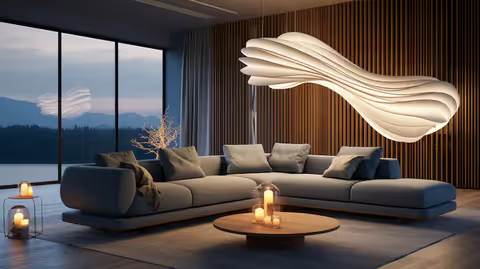
Understanding Modular Living Room Sets: Flexibility in Modern Home Design
Updated: November 24, 2026
Read More