Industrial Dust Collectors: Types, Benefits, Uses & Regulations in India
Industrial dust collectors are air filtration systems designed to capture and remove dust, smoke, powder, and other airborne particles generated during manufacturing and industrial operations. These systems help maintain cleaner indoor environments by collecting unwanted particles before they spread throughout a workplace or escape into the surrounding atmosphere.
Dust is a common by-product of industrial activities. Processes such as grinding, cutting, sanding, welding, crushing, mixing, and material handling can release significant quantities of airborne particles. Without appropriate dust management, these particles can affect workers, machinery, product quality, and environmental conditions.
An industrial dust collection system generally consists of a collection hood, ductwork, an air-moving fan, filtration equipment, and a dust storage container. Air containing dust enters the system, passes through filtration media, and releases cleaner air through the designated outlet.
Different industries require different filtration technologies depending on particle size, dust characteristics, air volume, temperature, and operating conditions.
How Industrial Dust Collectors Work
The working principle of an industrial dust collector involves capturing contaminated air, separating particles, filtering the air, and collecting the removed material.
The process generally follows these steps:
- Dust capture: Collection hoods or extraction points capture airborne particles near their source.
- Air transportation: Ductwork carries dust-containing air toward the filtration unit.
- Particle separation: Larger particles may separate through gravity or centrifugal force.
- Air filtration: Filter bags, cartridges, or other filtration media capture smaller particles.
- Dust collection: Accumulated material falls into a hopper or storage container.
- Clean air discharge: Filtered air is discharged through an appropriate outlet or returned indoors when permitted and properly controlled.
The filtration method depends on the industrial application and the required air quality.
Major Types of Industrial Dust Collectors
Several dust collection technologies are used across industrial environments. Each type has different operating characteristics and application requirements.
1. Baghouse Dust Collectors
<PRIVATE_PERSON>
Baghouse dust collectors use fabric filter bags to separate airborne particles from moving air. Dust accumulates on the filter surface, while cleaned air passes through the fabric.
These systems are commonly used in cement plants, steel manufacturing, foundries, and large material-processing facilities.
2. Cartridge Dust Collectors
Cartridge collectors use pleated filter elements that provide a relatively large filtration surface within a compact structure. They are frequently used in metalworking, pharmaceutical production, woodworking, and powder-processing applications.
3. Cyclone Dust Collectors
Cyclone collectors use centrifugal force to separate larger dust particles from airflow. Dust-containing air moves in a circular pattern, causing heavier particles to move toward the collection chamber.
They are often used as pre-separators before finer filtration equipment.
4. Wet Scrubbers
Wet dust collectors use liquid, usually water, to capture and remove particles from contaminated air. They are particularly useful in selected applications involving hot particles or certain combustible dust hazards.
However, they require appropriate wastewater handling and process-specific design.
5. Electrostatic Precipitators
Electrostatic precipitators use electrical charges to collect suspended particles on oppositely charged surfaces. They are commonly associated with large industrial combustion and processing operations.
Importance of Industrial Dust Collection Systems Today
Industrial dust control is important because airborne particles affect workplace health, environmental quality, equipment performance, and manufacturing operations.
Industries increasingly focus on industrial air filtration because manufacturing activities can generate different types of particulate pollution.
Worker Health and Workplace Safety
Continuous exposure to airborne dust can cause respiratory irritation and contribute to occupational diseases. Certain types of industrial dust, including silica-containing and asbestos-containing particles, present particularly serious health risks.
Effective dust extraction helps reduce exposure when properly designed and maintained. Respiratory protection and other workplace safety measures may also be necessary.
Environmental Protection
Industrial facilities can release particulate matter into the surrounding atmosphere through exhaust systems and other emission points.
Appropriate filtration helps control these emissions and supports compliance with applicable environmental requirements.
Equipment Protection
Dust accumulation can affect motors, electrical components, bearings, sensors, and ventilation equipment. Industrial dust collectors help reduce unwanted particle accumulation and support more reliable equipment operation.
Product Quality
Industries such as food processing, electronics, pharmaceuticals, and precision manufacturing require controlled production environments. Airborne contamination can affect product consistency and cleanliness.
Fire and Explosion Prevention
Certain combustible dusts, including metal, wood, coal, and organic powder, can create fire and explosion hazards under specific conditions.
Dust collection systems must therefore consider material properties, ignition sources, grounding, explosion protection, and applicable safety standards.
Industrial Applications Across Different Sectors
Industrial dust collectors are used in numerous manufacturing and processing environments.
| Industry | Common Dust Sources |
|---|---|
| Cement manufacturing | Limestone, clinker, and cement powder |
| Metal processing | Grinding, welding, and cutting |
| Woodworking | Sawdust, wood chips, and sanding particles |
| Pharmaceuticals | Powder mixing and material handling |
| Food processing | Flour, sugar, and grain particles |
| Mining | Crushing, drilling, and mineral handling |
| Chemicals | Powder blending and material transfer |
| Textile manufacturing | Fibres, lint, and fabric particles |
The selection of filtration equipment depends on the characteristics of the dust and the operating requirements of each industry.
Recent Updates and Developments in India
Industrial air pollution management in India has received increased regulatory attention during 2025 and 2026. Recent developments have placed greater emphasis on particulate matter emissions, workplace safety, and pollution control equipment.
November 21, 2025: Occupational Safety Code Implementation
India brought the Occupational Safety, Health and Working Conditions Code, 2020, into force on November 21, 2025. The framework strengthens the regulatory approach to workplace health, safety, and working conditions.
Its provisions are relevant to industries where employees may encounter airborne contaminants and hazardous materials.
February 20, 2026: Revised Particulate Matter Standards
The Commission for Air Quality Management (CAQM) issued Statutory Direction No. 98 on February 20, 2026, establishing a revised particulate matter emission limit of 50 mg/Nm³ for identified industrial categories across Delhi-NCR.
The requirements cover specified highly polluting industries and other identified industrial units.
July 31, 2026: Implementation Timeline Amendment
On July 31, 2026, CAQM amended Direction No. 98 and extended the implementation timeline for the revised particulate matter standards.
The revised limit of 50 mg/Nm³ became applicable to the covered industries from October 1, 2026.
These developments highlight the growing importance of appropriate air pollution control devices, including industrial dust collection and filtration systems.
Laws and Regulations Affecting Industrial Dust Collectors in India
Industrial dust collection systems are influenced by environmental legislation, workplace safety requirements, and industry-specific emission standards.
Air (Prevention and Control of Pollution) Act, 1981
This legislation provides the foundation for controlling and preventing air pollution in India.
The Central Pollution Control Board (CPCB) and State Pollution Control Boards (SPCBs) play important roles in implementing and monitoring industrial emission requirements.
Industrial establishments may require consent from the relevant pollution control authority under applicable provisions.
Environment (Protection) Act, 1986
The Environment (Protection) Act provides the central framework for environmental protection in India.
The Environment (Protection) Rules, 1986, establish emission standards for various industrial categories. Facilities must follow the standards applicable to their operations.
Occupational Safety, Health and Working Conditions Code, 2020
Effective from November 21, 2025, this Code consolidates several central labour laws relating to workplace health and safety.
It addresses occupational safety, hazardous working conditions, employee protection, and other workplace requirements.
Occupational Safety, Health and Working Conditions (Central) Rules, 2026
Notified on May 8, 2026, these rules include provisions addressing workplace cleanliness, ventilation, dust, fumes, and other airborne contaminants.
Rule 24 specifically addresses precautions against dust, noxious gases, fumes, and other impurities.
CAQM Industrial Emission Directions
Industries operating in Delhi-NCR must also consider applicable CAQM directions. The revised particulate matter emission limit of 50 mg/Nm³, effective October 1, 2026, applies to identified industrial categories.
Requirements can differ according to industrial activity, location, and applicable regulatory approvals.
Tools and Resources for Industrial Dust Management
Various technical tools and information resources help industrial facilities understand, monitor, and manage airborne dust.
- CPCB resources: Government information concerning industrial air pollution, emission standards, and environmental monitoring.
- State Pollution Control Board portals: Relevant information about consent requirements, industrial categories, and regional environmental regulations.
- CAQM publications: Directions and regulatory updates concerning air quality management in Delhi-NCR.
- NIOSH Dust Control Resources: Technical information about occupational exposure and industrial dust management.
- OSHA Technical Guidance: Educational material covering workplace ventilation, respiratory hazards, and industrial dust exposure.
- Airflow calculators: Tools for estimating airflow requirements based on duct dimensions and air velocity.
- Pressure drop calculators: Resources for understanding resistance across filters and ductwork.
- Particle monitoring instruments: Devices such as particulate matter monitors and particle counters help assess airborne particle concentrations.
- Differential pressure gauges: Instruments used to monitor pressure differences across filtration media and identify possible filter loading.
Technical calculations should be supported by qualified engineering assessments, particularly when dealing with hazardous or combustible dust.
Frequently Asked Questions About Industrial Dust Collectors
1. What is the main purpose of an industrial dust collector?
The primary purpose is to capture and remove airborne dust and particles generated during industrial processes. It helps improve workplace air quality, reduce environmental emissions, protect equipment, and control contamination.
2. Which industries commonly use industrial dust collection systems?
Cement, mining, metalworking, woodworking, pharmaceuticals, food processing, textiles, chemicals, and manufacturing industries commonly use dust collection systems.
The equipment type depends on the material being processed and the nature of the airborne particles.
3. What is the difference between a baghouse and a cartridge dust collector?
A baghouse uses fabric filter bags to capture particles, while a cartridge collector uses pleated filter elements.
Baghouse systems are frequently used in large industrial operations, whereas cartridge collectors are often suitable for applications requiring compact filtration arrangements.
4. How frequently should industrial dust collector filters be maintained?
Maintenance frequency depends on operating hours, dust characteristics, filter material, airflow, and manufacturer recommendations.
Regular inspection should include filter condition, pressure differential, airflow, ductwork, hopper accumulation, and leakage. Filters should be cleaned or replaced according to their operating condition and technical specifications.
5. Are industrial dust collectors required by Indian regulations?
Requirements depend on the industrial process, emission standards, workplace conditions, and applicable regulatory approvals.
Certain industries must install suitable air pollution control devices to meet prescribed emission limits. Workplace dust control measures may also be necessary under occupational safety regulations.
Conclusion
Industrial dust collectors play an important role in modern manufacturing by controlling airborne particles and supporting cleaner industrial environments. Different technologies, including baghouse collectors, cartridge systems, cyclones, wet scrubbers, and electrostatic precipitators, address different filtration requirements.
Their importance extends beyond air filtration. Proper dust management supports worker health, environmental protection, equipment reliability, and product quality.
In India, developments during 2025 and 2026, particularly the implementation of the Occupational Safety Code and revised industrial particulate matter standards in Delhi-NCR, demonstrate the increasing attention given to workplace safety and industrial emissions.
Understanding dust collection technologies, applicable regulations, and regular maintenance practices helps industrial facilities make informed decisions about air quality management and environmental responsibility.

Related Post...
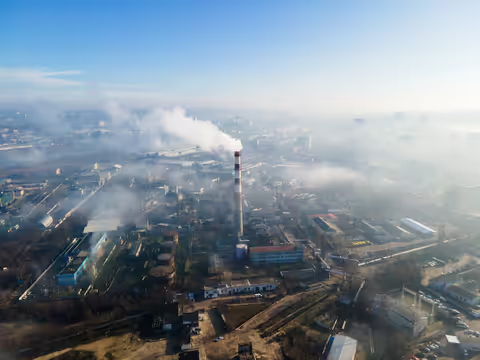
Industrial Dust Collectors: Types, Benefits, Uses & Regulations in India
Updated: November 25, 2026
Read More
Industrial Cooling Equipment: Types, Uses and Regulations in India
Updated: November 25, 2026
Read More