Green Manufacturing Technologies and Sustainable Practices
Green Manufacturing Technologies help industries reduce environmental impacts while maintaining efficient production processes. They include energy-efficient equipment, renewable energy, waste reduction, water conservation, and material recycling. Many readers explore this topic to understand how factories can become more environmentally responsible. This guide explains the technologies, practical applications, recent developments, and government policies supporting sustainable manufacturing in India.
Key Takeaways
- Green manufacturing reduces industrial waste, pollution, and unnecessary resource consumption.
- Renewable energy and efficient machinery support cleaner industrial production.
- Recycling and water conservation help industries manage natural resources.
- Government policies encourage sustainable industrial practices and environmental protection.
Related Searches
What is green manufacturing and how does it work?
Green manufacturing technologies and their applications
Benefits of sustainable manufacturing practices
Traditional manufacturing vs green manufacturing
How can industries reduce environmental pollution?
Green manufacturing initiatives and policies in India
In This Guide
- What Is Green Manufacturing and How Does It Work?
- Why Are Green Manufacturing Technologies Important Today?
- Recent Updates and Trends in Green Manufacturing Technologies
- Green Manufacturing Laws and Policies in India
- Traditional Manufacturing vs Green Manufacturing: A Comparison
- Tools and Resources for Sustainable Industrial Practices
- Frequently Asked Questions About Green Manufacturing
- Conclusion: Understanding Sustainable Industrial Production
What Is Green Manufacturing and How Does It Work?
Green manufacturing refers to producing goods through processes that minimize environmental damage and use natural resources responsibly. It focuses on reducing energy consumption, limiting pollution, managing industrial waste, and improving the use of raw materials throughout production.
The concept developed alongside growing awareness of industrial pollution, resource depletion, and climate change. Traditional manufacturing often focused mainly on production output, while green manufacturing also considers the environmental effects of materials, energy use, transportation, and waste disposal.
Green manufacturing is not limited to a particular industry. It applies to textiles, automobiles, electronics, chemicals, construction materials, food processing, and other manufacturing activities.
How Does Green Manufacturing Work?
Green manufacturing combines different technologies and operational methods to reduce the environmental impact of industrial activities.
Its main processes include:
- Resource efficiency: Using raw materials carefully and reducing unnecessary material consumption.
- Energy management: Installing efficient machinery, improving insulation, and monitoring electricity usage.
- Waste reduction: Preventing production waste through improved planning and material recovery.
- Water conservation: Reusing process water and introducing efficient treatment systems.
- Pollution control: Managing industrial emissions, wastewater, dust, and hazardous substances.
- Sustainable product design: Creating products that require fewer materials and can be repaired, reused, or recycled.
For example, a textile factory can install water recycling equipment, use energy-efficient motors, and recover leftover fabric for additional production. These measures help reduce resource consumption and the amount of waste generated.
Common Green Manufacturing Technologies
Several technologies support environmentally responsible production.
- Solar and wind energy: Generate electricity from renewable sources for industrial operations.
- Energy-efficient machinery: Motors, boilers, lighting, and production equipment designed to use less energy.
- Wastewater treatment systems: Remove pollutants from industrial wastewater before reuse or permitted discharge.
- Automation and smart sensors: Monitor equipment performance and identify unnecessary energy or material consumption.
- Electric industrial equipment: Replace certain fuel-powered machines with electrically operated alternatives.
- Material recycling systems: Recover metals, plastics, paper, and other materials for further use.
The suitability of each technology depends on the production process, available infrastructure, and environmental requirements.
Why Are Green Manufacturing Technologies Important Today?
Manufacturing supports employment, infrastructure, transportation, construction, and the production of everyday goods. However, industrial activities can also contribute to air pollution, greenhouse gas emissions, water contamination, and resource depletion.
Green manufacturing addresses these environmental concerns while supporting responsible industrial development. It is relevant to manufacturers, workers, communities, consumers, and government authorities.
Major Environmental Benefits
Green manufacturing practices address several common industrial problems.
- Lower emissions: Renewable electricity and energy-efficient equipment can reduce emissions associated with industrial energy use.
- Less waste: Recycling and improved production planning reduce the quantity of discarded materials.
- Water protection: Treatment and reuse systems help reduce freshwater consumption and wastewater pollution.
- Resource conservation: Efficient material usage reduces pressure on natural resources.
- Cleaner workplaces: Appropriate ventilation, pollution control, and chemical management can improve workplace conditions.
Who Benefits from Sustainable Manufacturing?
Manufacturers can improve resource management and monitor their environmental performance. Workers may benefit from improved workplace practices and better management of industrial hazards.
Nearby communities can benefit when factories manage emissions, wastewater, and industrial waste responsibly. Government authorities also use environmental standards to monitor industrial activities and protect public health.
However, green manufacturing requires technical planning, employee training, infrastructure, and regular environmental monitoring. Its results vary according to the technology and the conditions in which it operates.
Recent Updates and Trends in Green Manufacturing Technologies
Between 2024 and 2026, green manufacturing developments have increasingly focused on combining environmental practices with digital industrial technologies. Businesses and researchers are exploring ways to measure resource consumption, improve production processes, and reduce environmental impacts.
Artificial Intelligence and Smart Manufacturing
Artificial intelligence is increasingly being studied for industrial energy management and production monitoring. AI-based systems can analyse operational information to identify unusual energy consumption, equipment performance changes, and production inefficiencies.
Smart sensors also provide information about temperature, electricity use, water consumption, and machine performance. These measurements help operators understand where environmental improvements may be possible.
Circular Manufacturing and Material Recovery
Circular manufacturing focuses on keeping materials in use for longer periods. Instead of treating every leftover material as waste, industries examine opportunities for reuse, repair, remanufacturing, and recycling.
This approach is particularly relevant to metal production, electronics, automobile manufacturing, and textile processing.
Renewable Energy Integration
Industrial facilities are increasingly examining solar power, wind energy, and other renewable electricity sources. Some factories also combine renewable electricity with energy storage and conventional power systems to manage changing energy requirements.
Digital Twins and Predictive Maintenance
Digital twins are virtual representations of physical equipment or industrial processes. They can help engineers examine operating conditions and evaluate possible process changes.
Predictive maintenance uses equipment data to identify patterns that may indicate future failures. These technologies can support longer equipment life and reduce unnecessary material replacement.
Green Manufacturing Laws and Policies in India
India has introduced several environmental laws, government programmes, and regulatory frameworks relevant to sustainable industrial development. Their application depends on the industry, facility, production activity, and environmental impact.
Environment Protection Act, 1986
The Environment (Protection) Act, 1986 provides a broad legal framework for environmental protection in India. It gives the central government authority to establish environmental standards and regulate activities that may affect the environment.
Air and Water Pollution Laws
The Air (Prevention and Control of Pollution) Act, 1981 addresses the prevention and control of air pollution. The Water (Prevention and Control of Pollution) Act, 1974 establishes a framework for preventing and controlling water pollution.
The Central Pollution Control Board (CPCB) and State Pollution Control Boards monitor environmental compliance and implement relevant regulatory requirements.
Energy Conservation Act, 2001
The Energy Conservation Act, 2001 provides a framework for improving energy efficiency. The Bureau of Energy Efficiency (BEE) works on energy conservation programmes, standards, and initiatives for designated industrial sectors.
National Green Hydrogen Mission
India's National Green Hydrogen Mission supports the development and use of green hydrogen. It is relevant to industrial decarbonisation, particularly in sectors where reducing emissions through direct electrification can be difficult.
These policies form part of India's wider approach to environmental protection, energy efficiency, and cleaner industrial development.
Traditional Manufacturing vs Green Manufacturing: A Comparison
Traditional and green manufacturing use similar production foundations, but they differ in their approach to environmental management.
| Comparison Point | Traditional Manufacturing | Green Manufacturing |
|---|---|---|
| Energy | Often relies on conventional energy sources | Integrates energy efficiency and renewable energy |
| Raw materials | Focuses on production requirements | Emphasizes responsible material selection |
| Waste | Waste may be managed after production | Waste prevention and recovery are integrated |
| Water | May depend heavily on fresh water | Encourages treatment and water reuse |
| Pollution | Uses pollution control where required | Includes prevention and reduction measures |
| Product design | Emphasizes product function and quality | Considers durability, repair, and recyclability |
| Monitoring | Focuses on production performance | Includes environmental performance indicators |
Both approaches involve industrial machinery, workers, and production planning. Green manufacturing extends operational planning to include environmental considerations throughout the production cycle.
Tools and Resources for Sustainable Industrial Practices
Several platforms and technical resources help organizations understand and measure industrial sustainability.
- BEE Energy Audit Resources: Information about energy efficiency, industrial energy audits, and conservation practices.
- CPCB Resources: Environmental standards, pollution monitoring information, and waste management guidelines.
- GHG Protocol: Frameworks for measuring and reporting greenhouse gas emissions.
- SimaPro: Software used for life cycle assessment and environmental impact analysis.
- openLCA: A platform for evaluating environmental impacts across product life cycles.
- ISO 14001: An international standard covering environmental management systems.
- Energy Management Systems: Monitoring platforms used to examine industrial energy consumption and performance.
These resources cover different areas, including emissions measurement, environmental management, energy monitoring, and product life cycle assessment.
Frequently Asked Questions About Green Manufacturing
1. What is green manufacturing and how does it work?
Green manufacturing uses environmentally responsible production methods to reduce waste, pollution, energy consumption, and unnecessary resource use.
2. What are the main green manufacturing technologies?
Common technologies include solar energy, efficient machinery, wastewater treatment, smart sensors, material recycling, and electric industrial equipment.
3. What is the difference between traditional and green manufacturing?
Traditional manufacturing mainly focuses on production activities, while green manufacturing also considers resource conservation and environmental impacts.
4. Why is green manufacturing important for Indian industries?
It supports environmental protection, energy efficiency, responsible resource management, and compliance with applicable environmental regulations.
5. How does sustainable manufacturing reduce industrial pollution?
It uses cleaner energy, improved production methods, wastewater treatment, material recovery, and pollution prevention systems.
Conclusion: Understanding Sustainable Industrial Production
Green manufacturing technologies combine efficient production methods with responsible environmental management. Renewable energy, recycling, water conservation, and digital monitoring help industries address environmental challenges. Indian environmental laws and government initiatives provide a framework for cleaner industrial development. Sustainable manufacturing therefore connects industrial production with resource conservation and long-term environmental responsibility.

Related Post...
Industrial Cybersecurity: Discover Key Threats and Safety Measures
Updated: November 28, 2026
Read More
Robotics in Manufacturing: Insights into Applications and Production Processes
Updated: November 28, 2026
Read More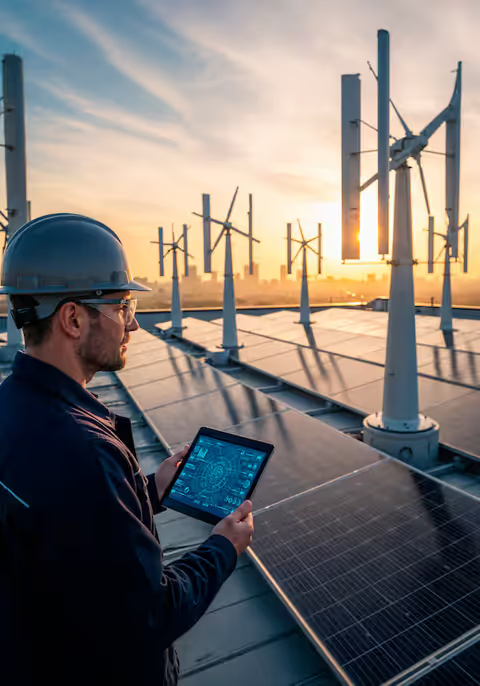
Understanding Industrial Research Energy Systems: A Detailed Overview
Updated: November 28, 2026
Read More